
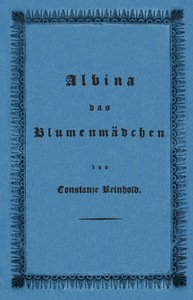
Albina, das Blumenmädchen by Caroline Reinhold
Caroline Reinhold's 1821 novella, Albina, das Blumenmädchen, is a hidden gem from the Biedermeier period that feels startlingly relevant. It's a story that proves you don't need epic battles or sprawling casts to create real tension.
The Story
Albina is a young flower seller in an unnamed German city. Her life is simple, defined by her modest stall and her quiet dignity. Everything changes when Herr von S., a wealthy and influential gentleman, begins to visit her daily. He doesn't just buy flowers; he watches her. He asks probing questions. His attention shifts from curious to possessive. Albina, instinctively wary, tries to maintain her distance, but a man of his status holds immense power over a woman of hers. The plot tightens like a vise as von S.'s intentions become clearer. He doesn't want to marry her; he wants to own her, to reshape her into a companion for his own amusement, stripping away her identity. The central drama isn't about loud confrontations, but about the silent, desperate struggle of a person trying to retain her self in the face of overwhelming social pressure.
Why You Should Read It
What grabbed me was Albina's quiet strength. She's not a revolutionary shouting from the rooftops. Her resistance is in her posture, her refusal to be flattered, and her fierce protection of her inner life. Reinhold writes her with such subtlety. You feel the weight of every glance from von S., the danger in every 'kind' gesture. The book is a masterclass in showing how oppression works in quiet rooms and through polite society. It's also a fascinating look at class. Von S. genuinely believes his plan is a form of rescue, which makes his actions even more chilling. The tension comes from wondering not if he will act, but how far Albina can bend before she breaks—or fights back.
Final Verdict
This book is perfect for readers who love character-driven historical fiction, especially stories that explore the lives of ordinary women. If you enjoyed the subtle social tensions in Jane Austen but wished for a grittier, more precarious setting, you'll find a kindred spirit in Albina. It's also a great pick for anyone interested in early 19th-century German literature beyond the heavyweights like Goethe. It’s a short, focused, and powerfully unsettling story that stays with you. A true rediscovery that deserves a spot on your shelf.
Legal analysis indicates this work is in the public domain. It is now common property for all to enjoy.
Donald Martin
1 year agoVery helpful, thanks.
Jackson Clark
11 months agoWithout a doubt, it provides a comprehensive overview perfect for everyone. Don't hesitate to start reading.
Joseph Sanchez
1 year agoMy professor recommended this, and I see why.
Daniel Anderson
1 month agoI didn't expect much, but the pacing is just right, keeping you engaged. Thanks for sharing this review.






Emily Moore
6 months agoEnjoyed every page.