
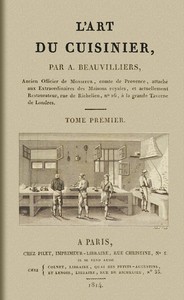
L'Art du Cuisinier, Volume 1 by A. B. Beauvilliers
Let's clear something up right away: this isn't a storybook with a plot in the traditional sense. There's no hero's journey, at least not a fictional one. Instead, L'Art du Cuisinier is the real-life blueprint for a revolution that happened on your plate.
The Story
The 'story' here is the seismic shift in how people ate. Before the French Revolution, elaborate meals were mostly private affairs for the aristocracy, cooked in their grand chateaus. After the revolution, those chefs were out of a job, and a new, moneyed public emerged. Antoine Beauvilliers was one of the first to see the opportunity. He opened a place where you could come in, sit at your own table, order from a written menu, and pay at the end. Sounds normal now, but it was radical then. This book, published in 1814, is his effort to write down everything he knew. It's a massive, detailed manual covering soups, sauces, roasts, pastries, and table service. The narrative is in the recipes and the instructions—it's the story of French cuisine being systematized and saved from oblivion.
Why You Should Read It
Reading this is a completely different experience from a modern cookbook. You're not just learning how to make a sauce Espagnole; you're witnessing its official birth certificate. The prose is formal, of course, but there's a palpable sense of urgency and pride. Beauvilliers isn't just sharing recipes; he's defending a culture and setting the standard for excellence. You see the origins of kitchen hierarchy (he outlines the brigade system) and the obsession with precision that defines French cooking. For me, the magic is in the small details—the specific instructions for clarifying consommé or trussing a bird—that haven't changed in 200 years. It connects you directly to the hands of the chefs who built an institution.
Final Verdict
This is a niche read, but a profoundly rewarding one. It's perfect for food history nerds, professional chefs curious about their roots, and anyone who's ever sat in a nice restaurant and wondered, 'How did all this start?' It's not a casual bedtime read; it's a book to dip into, to marvel at, and to use as a reference. Think of it as the foundational textbook of the restaurant world. If you want to understand not just what we eat, but how and why we eat the way we do in the West, this is the essential starting point. Just be prepared—it might make you very hungry for both knowledge and a perfectly roasted chicken.
This historical work is free of copyright protections. Thank you for supporting open literature.
Ashley Nguyen
1 year agoAfter hearing about this author multiple times, it challenges the reader's perspective in an intellectual way. A valuable addition to my collection.
Betty Anderson
1 year agoI came across this while browsing and it challenges the reader's perspective in an intellectual way. Absolutely essential reading.










Lucas Hill
7 months agoFive stars!