
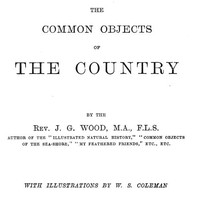
The Common Objects of the Country by J. G. Wood
Forget epic novels for a moment. 'The Common Objects of the Country' by J.G. Wood is a different kind of adventure. First published in 1858, it’s a field guide written with the enthusiasm of a true believer, meant for the everyday Victorian who might take a weekend stroll in the countryside. There’s no traditional plot with characters and a climax. Instead, the book’s journey is one of attention. Wood systematically walks you through the landscapes you might encounter—hedgerows, ponds, woods, heaths—and points out the residents.
The Story
The ‘story’ is one of discovery. Each chapter focuses on a category of common life. Wood describes birds not just by sight, but by their songs and habits. He examines the intricate engineering of a spider’s web, the lifecycle of a frog in a ditch, and the various shells you might find on a beach. He talks about trees, wildflowers, insects, and even the weather. Using clear language and his own detailed illustrations, he acts as a patient companion, naming things and explaining what they do. The narrative arc is simply the shift from not knowing to knowing, from seeing a ‘green blur’ to identifying specific mosses, ferns, and grasses.
Why You Should Read It
I loved this book for its contagious sense of wonder. Wood isn’t a cold scientist listing facts; he’s a guy who gets genuinely excited about how a caterpillar turns into a moth. Reading it slows you down. In our fast-paced world, this book is a manual for mindfulness, rooted in the natural world. It’s also a fascinating historical snapshot. You get a sense of what the English countryside was like over 150 years ago, and it’s charming (and sometimes amusing) to see which creatures he considers a terrible nuisance versus a beloved friend. His passion makes even the most humble earthworm worthy of a closer look.
Final Verdict
This book is perfect for anyone with a curious mind who feels disconnected from nature. It’s for the person who wants to know the names of the birds at their feeder, or what that pretty purple flower is on their walk. It’s a fantastic, low-pressure read for gardeners, hikers, or just someone who needs a quiet, analog escape. Be warned: it’s from a different time, so some information is outdated. But that’s part of its charm. Don’t read it as a modern textbook. Read it as a conversation with a knowledgeable, kindly, and deeply enthusiastic old friend who wants nothing more than to help you see the magic in the mundane.
This book is widely considered to be in the public domain. Preserving history for future generations.
Michelle Thomas
4 months agoEssential reading for students of this field.
Matthew Johnson
1 year agoA bit long but worth it.
Kenneth Clark
1 year agoCompatible with my e-reader, thanks.
Donna Hernandez
1 year agoHaving read this twice, the content flows smoothly from one chapter to the next. Definitely a 5-star read.

Joshua Perez
1 year agoVery interesting perspective.