
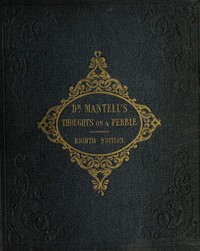
Thoughts on a Pebble, or, A First Lesson in Geology by Gideon Algernon Mantell
Published in 1829, Thoughts on a Pebble is less a traditional story and more a friendly, one-sided conversation. The book is framed as a lesson, with Mantell himself as the guide. He picks up a common flint pebble from a country lane and uses it as a starting point for a grand tour of geological time.
The Story
Mantell begins by asking the reader to really look at this pebble—its shape, its hardness, its glossy surface. From there, he walks us backward. He explains how it was once part of a chalk sea bed, teeming with microscopic creatures. He describes the immense pressure and time that turned soft sediment into stone. Then, he goes even further back, talking about the molten forces that shaped the world long before life as we know it existed. Along the way, he shares his own excitement about discovering giant fossil bones (what we now call dinosaurs) in the Sussex countryside. The 'plot' is the journey of the pebble itself, from a fiery beginning to the quiet present, and Mantell's passionate effort to make that incredible timeline understandable.
Why You Should Read It
You should read this to feel the thrill of early discovery. This isn't a dry textbook. You can hear Mantell's voice—his wonder, his frustration when people didn't believe him, his sheer joy in the puzzle. It captures a specific moment when science was becoming something everyday people could engage with. The big theme is that the world is ancient and full of dramatic, forgotten stories, and you can find clues everywhere. It makes you look at the ground differently. Mantell wasn't just a stuffy academic; he was a storyteller for the Earth, and his enthusiasm is contagious.
Final Verdict
This book is perfect for curious minds who enjoy history, science, or just great nonfiction storytelling. It's ideal for a reader who wants a short, digestible glimpse into the birth of modern geology and the mind of a fascinating self-taught scientist. If you've ever enjoyed a walk in nature and pondered the landscape, Mantell will feel like a kindred spirit from the past, eager to show you the secrets hidden in plain sight.
Legal analysis indicates this work is in the public domain. Thank you for supporting open literature.
Ava Clark
1 year agoI have to admit, the depth of research presented here is truly commendable. Exactly what I needed.
Linda Jackson
1 month agoI stumbled upon this title and the depth of research presented here is truly commendable. Exceeded all my expectations.






Betty Wilson
1 year agoMy professor recommended this, and I see why.