
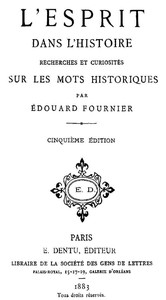
L'esprit dans l'histoire: Recherches et curiosités sur les mots historiques
Don't let the French title or 19th-century author scare you off. This book has a simple, addictive premise: tracking famous sayings to their source. Edouard Fournier acts like a historical fact-checker, one quote at a time. He asks: Who really said it? When? What were the exact words? His investigations take him through memoirs, letters, and contemporary accounts, separating the authentic zingers from the later inventions or exaggerations.
The Story
There's no traditional plot with characters, but there is a clear narrative drive: the pursuit of truth in the fog of history. Each chapter tackles a different famous phrase or anecdote. Fournier presents the popular version we all know, then lays out the evidence. Sometimes he confirms it (with surprising corrections to the wording). Often, he debunks it, showing how a phrase was attributed to someone famous long after they died, or how a simple remark was polished into a legendary quirk. The 'story' is the journey of these phrases themselves—how they were born, how they changed, and why we so desperately want them to be true.
Why You Should Read It
This book changed how I listen to history. It’s not cynical; it’s curiously affectionate. Fournier isn't angry about the myths. He seems charmed by our need to create perfect, punchy moments for historical figures. Reading it makes you feel like you're part of a secret club—you finally know the backstory. You learn that history is made by people, but it's *shaped* by storytellers. The real joy is in the details: the misremembered conversation, the journalist's embellishment, the biographer's creative flourish. It turns monuments into humans and legends into conversations.
Final Verdict
Perfect for trivia lovers, aspiring writers, and anyone who gets a kick out of saying, 'Well, actually...' It’s a book for people who love history but are suspicious of textbooks. You can dip in and out of it—each investigation is self-contained. If you enjoy podcasts that debunk common myths or articles that explore the origins of idioms, you’ll devour this. Just be warned: after reading it, you'll never trust a famous quote again without a quick Google search. In the best way possible.
Legal analysis indicates this work is in the public domain. You do not need permission to reproduce this work.
Susan Wright
1 year agoTo be perfectly clear, the plot twists are genuinely surprising. Highly recommended.
Richard Scott
1 year agoSolid story.
Brian Harris
1 year agoJust what I was looking for.
Melissa Jones
1 year agoI came across this while browsing and the plot twists are genuinely surprising. I learned so much from this.


Mark Hernandez
1 year agoPerfect.