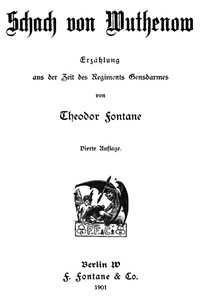
Schach von Wuthenow by Theodor Fontane
The Story
The year is 1806, and Berlin's high society is buzzing with gossip and parties, trying to ignore the looming threat of Napoleon's army. At the center of this world is Captain Schach von Wuthenow—handsome, charming, and admired by all. He's a man who values his flawless reputation above everything else.
His life gets complicated when he starts visiting the home of Frau von Carayon and her daughter, Josephine. Josephine is intelligent and kind, but she bears the scars of smallpox, which makes her, in the shallow view of their society, 'unmarriageable.' In a moment of confused impulse, Schach sleeps with Josephine. When she becomes pregnant, he is faced with a crisis. To do the honorable thing and marry her would ruin his social standing. To abandon her would ruin his honor. The entire novel watches him twist and turn, trying to find a way out of a trap largely of his own making, as the real world of war begins to crash into their insulated social bubble.
Why You Should Read It
This isn't a book about dramatic sword fights, even though it's about soldiers. The tension is all internal and social. Fontane is a master at showing how tiny gestures and whispered conversations can carry the weight of major drama. You feel the stifling pressure of 'what will people think?' in every chapter.
Schach is a frustrating, fascinating character. You won't always like him—he's vain, weak, and selfish—but you understand the prison of his own reputation. The women, especially Josephine and her mother, are portrayed with remarkable depth and dignity, often seeming far stronger than the men who are supposed to be the heroes. It’s a sharp, quiet critique of a society obsessed with surfaces.
Final Verdict
Perfect for readers who love character-driven historical fiction where the history is a backdrop for human drama. If you enjoyed the social tensions in Jane Austen but wished they had a darker, more Prussian edge, this is your book. It's also a great, short introduction to Fontane, one of Germany's greatest novelists. Just don't expect a fast-paced plot; the reward here is in the exquisite psychological pressure and the timeless question: what do we owe to others versus what we owe to our own carefully constructed selves?
Legal analysis indicates this work is in the public domain. Distribute this work to help spread literacy.