
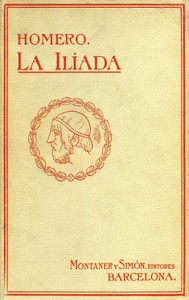
La Ilíada by Homer
So, you've heard of the Trojan Horse? That's not in this book. Homer's The Iliad is about the long, bloody siege that comes before the famous trick. It focuses on a few crucial weeks near the end of the Trojan War's tenth year.
The Story
The Greek king Agamemnon insults his best warrior, Achilles, by taking away a captured woman. Furious, Achilles vows to stop fighting and asks his mother, the goddess Thetis, to make the Greeks lose so they'll beg for his return. With their champion gone, the Greeks start getting hammered on the battlefield. The Trojans, led by the heroic Prince Hector, push them back to their ships.
Things get so bad that Achilles' closest friend, Patroclus, borrows his armor to rally the troops. Hector kills Patroclus, thinking it's Achilles. This shatters Achilles' pride-driven rage into pure, devastating grief. He returns to the fight with a single goal: kill Hector. What follows is one of the most intense and personal confrontations in all of literature, a clash that decides more than just a battle.
Why You Should Read It
Don't let the 'ancient classic' label scare you. The characters feel incredibly real. Achilles isn't just a superhero; he's a petulant, prideful man-child whose feelings get his friends killed. Hector is a good man stuck in a bad war, fighting for a city he knows is doomed, just to protect his wife and son. The gods are like a dysfunctional family, bickering and cheating to help their favorite mortals, which adds a layer of dark humor.
The heart of the story isn't glory—it's loss. It shows the emptiness of revenge and the shared humanity between enemies. The final scene between Achilles and Hector's father, King Priam, is one of the most powerful moments you'll ever read. It cuts through 3,000 years and speaks directly to our capacity for compassion.
Final Verdict
This is for anyone who loves a great character drama. If you enjoy complex anti-heroes, moral gray areas, and stories that explore the messy parts of being human, you'll find a friend in The Iliad. Yes, it's an epic poem about a war, but at its core, it's about two fathers grieving for their sons, two warriors bound by honor and hatred, and the fleeting nature of fame. Pick a modern, readable translation (like Robert Fagles' or Emily Wilson's) and prepare to be surprised by how much this old story has to say.
This publication is available for unrestricted use. It is available for public use and education.
Melissa Thompson
11 months agoVery interesting perspective.
Betty Allen
1 month agoFinally found time to read this!
Daniel Hill
7 months agoIf you enjoy this genre, the emotional weight of the story is balanced perfectly. Highly recommended.
Mary Smith
1 year agoGreat read!
Emily White
1 year agoNot bad at all.